Article Summary:

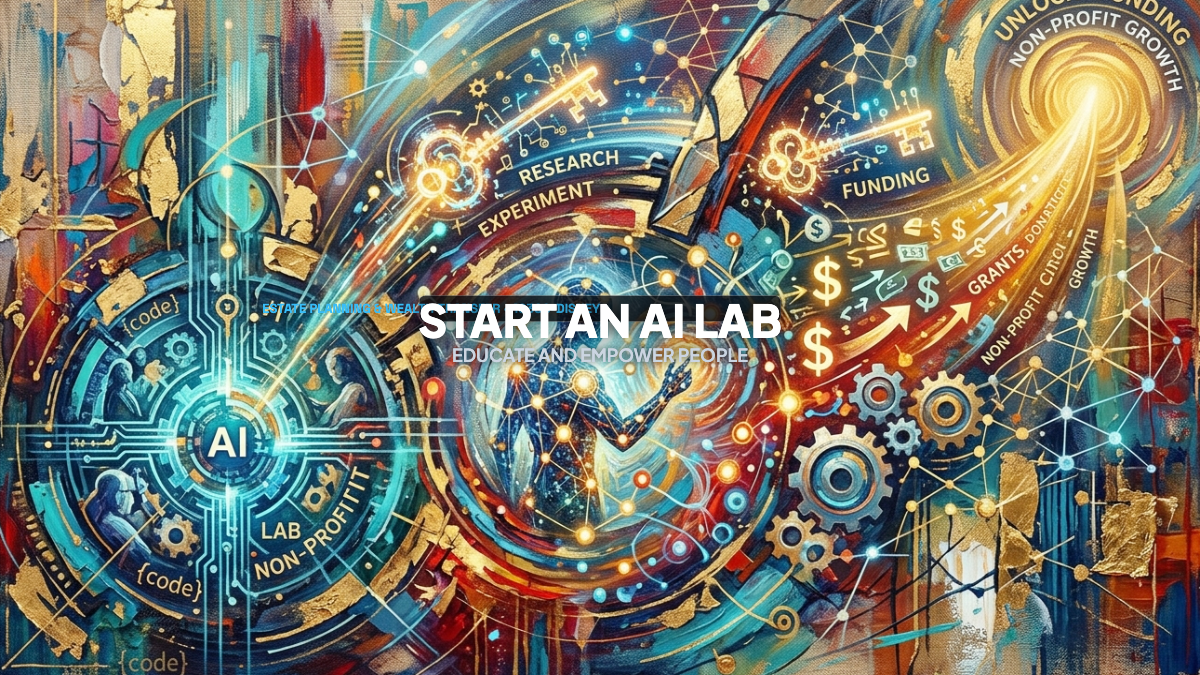
Establishing a tax-exempt non-profit AI Lab allows your company to strategically funnel education, research, and humanitarian AI experiments into a dedicated entity. This unlocks significant opportunities for grants, corporate donations, and individual philanthropy, enhancing your industry impact and fostering a powerful double bottom line approach by 2026. This is not merely an ethical stance; it is a strategic imperative for businesses aiming for both financial health and measurable societal contributions.
The Strategic Imperative: Why an AI Lab Now?
In 2026, the integration of Artificial Intelligence (AI) is no longer a luxury but a necessity for businesses striving for innovation, efficiency, and sustained relevance. However, the direct costs of advanced AI research, talent acquisition, and infrastructure can be prohibitive for many for-profit entities, especially when the immediate return on investment is not clearly defined or is long-term. This is where a non-profit AI Lab offers a compelling strategic advantage.
By housing your AI-driven educational, research, and humanitarian initiatives within a tax-exempt non-profit structure, you create a distinct entity focused solely on public benefit. This separation allows your commercial enterprise to concentrate on its core business while the non-profit arm explores cutting-edge AI applications without the immediate pressure of commercialization.
This model not only diversifies your funding streams but also significantly amplifies your brand’s goodwill and trust among consumers, partners, and employees who increasingly seek out socially responsible companies.
The nonprofit sector itself is rapidly adopting AI, leveraging it for automating tasks, analyzing impact data, and improving grant writing and donor outreach. This growing ecosystem demonstrates the viability and increasing acceptance of AI within mission-driven organizations.
Structuring Your Impact: The Non-Profit AI Lab Model
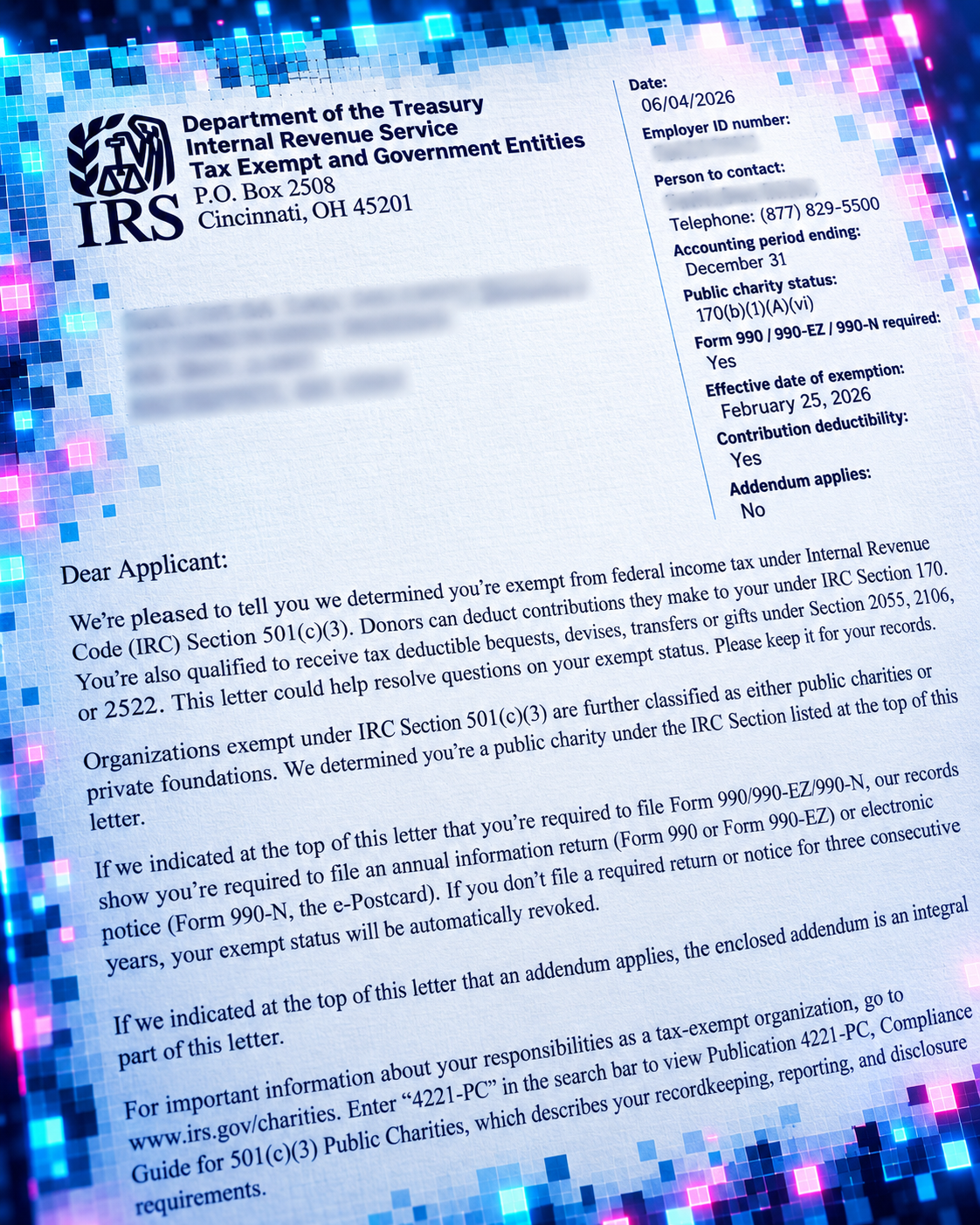
The foundation of this strategy lies in establishing a non-profit organization, typically structured under Internal Revenue Code (IRC) Section 501(c)(3). This classification grants federal tax exemption and allows the organization to receive tax-deductible contributions.
Choosing the Right Non-Profit Classification: 501(c)(3)
To qualify as a 501(c)(3) organization, your AI Lab must be “organized and operated exclusively for exempt purposes,” which include charitable, religious, scientific, or educational objectives. For an AI Lab, the “scientific” and “educational” purposes are most relevant. An organization qualifies as “educational” if its intent is to provide individuals or the public with fact-based instruction that aids in better decision-making or community improvement. This can involve instruction and training to develop capabilities or educating the public on beneficial subjects. Similarly, “scientific” purposes encompass research conducted in the public interest.
Crucially, a 501(c)(3) organization “must not be organized or operated for the benefit of private interests,” meaning no part of its net earnings can inure to the benefit of any private shareholder or individual. This “private benefit” rule is critical. While incidental private benefit may be permissible if it is a necessary byproduct of advancing a public purpose, it must be both qualitatively and quantitatively incidental – meaning it’s a necessary byproduct and minimal compared to the public benefit. This distinction is vital when setting up the relationship between your for-profit business and the non-profit AI Lab.
Defining Your Mission: Education, Research, and Humanitarian Causes
Your non-profit AI Lab’s mission should clearly articulate its commitment to public benefit through AI. This could include:
- **AI Education:** Developing curricula, workshops, and open-source learning platforms to enhance AI literacy for underserved communities, students, or professionals. This aligns with grants like the F5 STEM & AI Education Grants and the LinkedIn Future of Work Fund 2026, which support non-profits in preparing individuals for an AI-shaped labor market.
- **AI Research:** Conducting non-proprietary research into ethical AI development, AI safety, or AI applications for solving societal challenges like climate change, healthcare disparities, or disaster response. This can attract funding from federal agencies (e.g., NSF AI Institutes), private foundations (e.g., Bill & Melinda Gates Foundation), and even corporate AI investment programs.
- **Humanitarian AI Experiments:** Deploying AI solutions for specific social impact initiatives, such as using AI for immigration legal services, optimizing aid distribution, or developing assistive technologies for people with disabilities.
Unlocking Financial Pathways: Grants, Donations, and Corporate Partnerships
One of the most significant advantages of a non-profit AI Lab is its ability to tap into diverse funding sources unavailable to for-profit companies.
Government Grants
Federal agencies are increasingly investing in AI initiatives, particularly those with a research or public benefit focus. For instance, the National Science Foundation (NSF) offers grants through programs like the AI Institutes and the Civic Innovation Challenge (CIVIC), which fund partnerships between researchers and community organizations to deploy emerging technologies, including AI, for community-level practice. The Institute of Education Sciences (IES) also supports research on AI-enabled educational tools and interventions.
Corporate Social Responsibility (CSR) Initiatives
Many corporations actively seek non-profit partners to bolster their CSR profiles, enhance brand image, and engage employees. Partnering with your non-profit AI Lab allows companies to align with cutting-edge AI for good initiatives, demonstrating a commitment to societal issues.
This can lead to substantial corporate donations, sponsorships, and collaborative projects. Companies like Microsoft and Google already offer cloud credits and subsidized services for qualifying non-profits to access AI capabilities.
Foundations and Philanthropic Organizations
Private foundations are a crucial funding source. The Bill & Melinda Gates Foundation, for example, is scaling its annual spending to $9 billion by 2026, funding AI initiatives in global health, development, and education. The OpenAI Foundation has committed $50 million in 2026 to support non-profits engaging with AI to advance their missions and serve communities, particularly focusing on community-led engagement to reduce barriers and expand opportunity. Other foundations like the Walton Family Foundation also invest in adaptive learning platforms using AI for underserved students. Our list for 2026 contains roughly 9,000 such organizations that are actively funding these sorts of nonprofit missions.
Individual Donors
A clear, impactful mission focused on AI for good can resonate strongly with individual donors, who are often motivated by the opportunity to contribute to innovative solutions for societal challenges. Non-profits excel at cultivating these relationships and leveraging technology for donor engagement. We have personally observed that individuals are more receptive to supporting nonprofit initiatives, especially if it involves a substantial tax deduction as well – which your nonprofit offers.
Beyond Profit: The Double Bottom Line Advantage
The concept of a “double bottom line” (DBL) measures success not only by financial performance but also by positive social impact. For businesses, integrating a non-profit AI Lab naturally creates this dual focus. It acknowledges that businesses have a responsibility beyond just shareholders, contributing to societal well-being and environmental sustainability.
Embracing a DBL approach offers several strategic benefits:
- **Enhanced Brand Reputation and Consumer Loyalty:** Today’s consumers, particularly Millennials and Gen Z, actively seek out and support companies that prioritize social responsibility and align with their values. A non-profit AI Lab clearly signals your commitment to social good.
- **Attracting and Retaining Talent:** Employees, too, are increasingly looking for purpose-driven work and companies that align with their personal values. A non-profit AI Lab can significantly boost employee morale, engagement, and retention by offering opportunities for meaningful contribution.
- **Unique Partnerships and Innovation:** The public-good focus of a non-profit AI Lab can open doors to collaborations with universities, government bodies, other non-profits, and even competitors, fostering an ecosystem of shared knowledge and accelerated innovation that might be challenging under a purely commercial framework.
- **Long-Term Sustainability:** By investing in societal solutions through AI, your business contributes to a more stable and prosperous environment, which ultimately benefits its long-term growth and market relevance.
Real-World Applications: Businesses Already Leading the Way
While direct examples of businesses launching explicit “AI Labs” as separate non-profits are emerging, the model of a for-profit entity supporting or creating a non-profit arm for R&D, education, or social impact is well-established. These examples illustrate the spirit and strategic advantages:
- **The AI Alliance:** In June 2025, the AI Alliance formed a non-profit AI Lab and an AI Technology & Advocacy Association to scale open-source development, open research, education, and advocacy for AI globally. This demonstrates a collective industry effort to create a shared resource for AI advancement with a public benefit focus.
- **Mobile Pathways:** This non-profit leverages AI to provide immigration lawyers with real-time updates and insights into immigration cases, demonstrating how AI can be applied directly to humanitarian causes and legal aid. Their success in receiving direct access to immigration databases highlights the trust and unique partnerships available to non-profits.
- **GitLab Foundation’s AI for Economic Opportunity Fund:** While a foundation, this initiative supports non-profits using AI to promote economic mobility, showcasing how philanthropic entities actively seek out and fund AI-driven social impact. Non-profits like Recidiviz (reducing workloads in criminal justice with AI) and CareerVillage (AI career coach) are direct beneficiaries.
- **Microsoft and Google Initiatives:** Through programs like Microsoft Cloud for Nonprofits and Google for Nonprofits, these tech giants provide subsidized access to AI tools and cloud services, implicitly encouraging non-profits to build their AI capabilities for social good. This ecosystem fosters an environment ripe for business-backed non-profit AI labs.
These examples highlight a clear trend: leading organizations are recognizing that AI’s transformative power is best leveraged when aligned with societal good, and the non-profit model is a highly effective vehicle for this alignment.
Navigating the Legal Landscape: Key Considerations
Establishing and operating a non-profit AI Lab requires careful adherence to legal and regulatory frameworks to maintain its tax-exempt status.
Governance and Compliance
A 501(c)(3) organization must have a dedicated board of directors and operate transparently. Policies regarding conflicts of interest are paramount to prevent any private benefit from accruing to individuals associated with the founding for-profit business. The non-profit must ensure its activities are genuinely directed toward a public purpose, with any private benefit being “qualitatively and quantitatively incidental”. This means any benefit to the affiliated for-profit must be a necessary byproduct of achieving the non-profit’s exempt purposes and minimal in magnitude compared to the public benefit.
Intellectual Property Considerations
Intellectual property (IP) ownership is a critical area. When your for-profit business establishes an AI Lab, clear agreements must define who owns the IP generated by the non-profit. Generally, IP created by the non-profit in furtherance of its exempt mission should belong to the non-profit. This can be complex, especially if the for-profit contributes resources or personnel. Work-for-hire agreements, material transfer agreements (MTAs), research collaboration agreements (RCAs), and sponsored research agreements (SRAs) are essential tools to delineate IP ownership and usage rights between the for-profit and non-profit entities. Seeking counsel from attorneys specializing in intellectual property for non-profits is highly recommended to protect both entities’ interests.
Careful drafting of these agreements ensures that the non-profit can freely use the IP for its public benefit mission, while potentially allowing the for-profit to license or utilize the IP under fair market terms, without jeopardizing the non-profit’s tax-exempt status through impermissible private benefit.
Avoiding Private Benefit Issues
The IRS strictly prohibits 501(c)(3) organizations from being operated for the benefit of private interests. This means that the non-profit AI Lab cannot primarily serve the commercial interests of your for-profit business. Any interactions-such as licensing agreements for IP, shared resources, or services-must be conducted at arm’s length and at fair market value to avoid “excess benefit transactions” that could incur excise taxes or even jeopardize the non-profit’s exempt status. Transparency and robust documentation are key to demonstrating compliance.
Ready To Launch? Here’s Our Approach: Strategic, Methodical, and Reverse-Engineered
Establishing and operating a non-profit AI Lab requires careful navigation of tax, legal, and operational frameworks to secure 501(c)(3) status and ensure ongoing compliance. Having already assisted several organizations in setting up dedicated AI labs and submitting over $20 million in AI-focused grant applications this year, our team guides you through a proven, step-by-step process:
- Strategic Alignment: We structure the non-profit’s mission to complement your commercial goals while maintaining strict compliance with IRS private benefit regulations.
- Legal & Entity Formation: We handle the regulatory filings to secure 501(c)(3) tax-exempt status, anchoring the organization’s purpose in qualified scientific and educational objectives.
- Capital & Grant Acquisition: We build a targeted funding strategy, identifying applicable public and private grants, structuring corporate partnerships, and managing the application pipeline.
- Intellectual Property Frameworks: We draft cross-entity agreements (including RCAs, SRAs, and licensing terms) that protect underlying IP while enabling public-benefit research and compliant commercial utility.
- Governance & Ongoing Compliance: We institute board oversight policies, conflict-of-interest safeguards, and operational workflows to ensure long-term tax compliance and grant eligibility.
The opportunity to leverage AI for both profit and profound societal good is immense. By strategically establishing a tax-exempt AI Lab, your business can unlock significant funding and partnership opportunities while cementing its legacy as a leader in responsible innovation and truly embracing the double bottom line.
That’s it for now. Talk soon.
Sid Peddinti, Esq.
Nonprofit & Tax Attorney. Family Office Architect.Hybrid AI Architect.